BY INNOCENT KIIZA
At the foothills of the Rwenzori Mountains in western Uganda, the sound of rushing water has become a warning.
During heavy rains, rivers descend violently from the mountains, tearing through villages in Kasese District with little mercy. Floodwaters swallow gardens, destroy homes, and leave families hungry and displaced.
In recent years, the measure of life in the Rwenzori region has been increasingly dictated by climate extremes, prolonged droughts followed by destructive floods and landslides.
For communities living along these fragile land slopes, climate change is no longer a distant global conversation. It is visible in collapsing riverbanks, disappearing harvests, and sleepless nights whenever dark clouds gather over the mountains.
Yet amid the devastation, women farmers are quietly leading one of Uganda’s most promising climate solutions: indigenous agroforestry linked to carbon credit initiatives.
What began as a survival strategy is now evolving into a model for climate resilience, food security, and green livelihoods.
Women on the Frontlines of Climate Adaptation
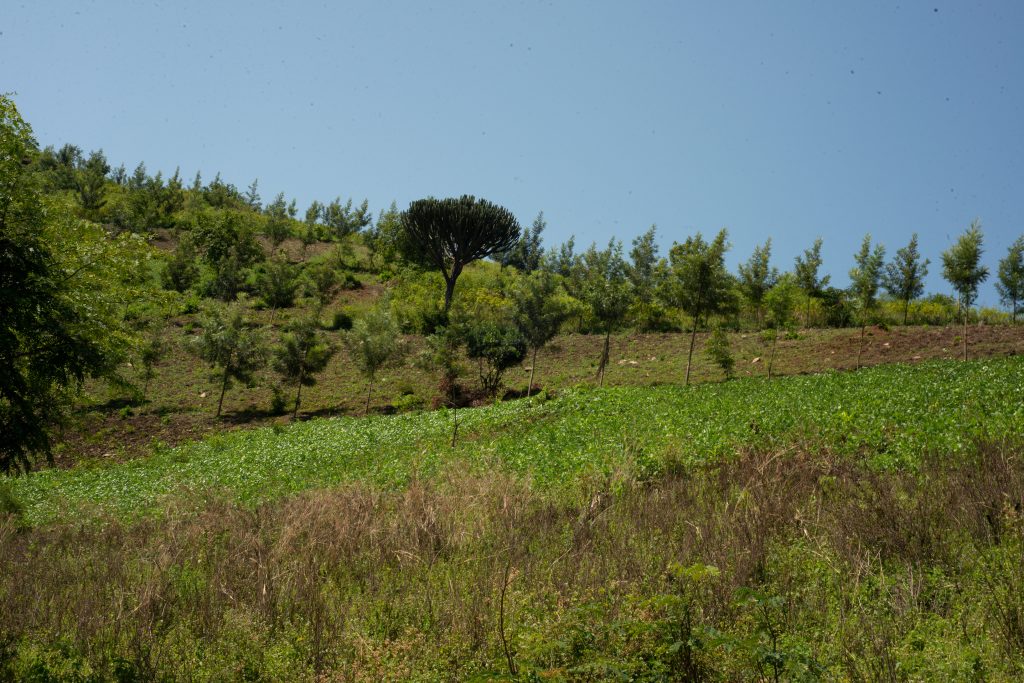
On a rocky hillside in Kasese District, 60-year-old farmer Margret Biira walks through rows of coffee, cassava, beans, and bananas shaded by Grevillea and Markhamia lutea trees among other tree species .
A decade ago, much of this land was nearly unproductive. Heavy rains washed away fertile soil while strong winds damaged crops season after season.
Today, the farm tells a different story.
“Grevillea trees help control wind and soil erosion,” Biira explains. “When you intercrop trees with food crops, the yields improve.”
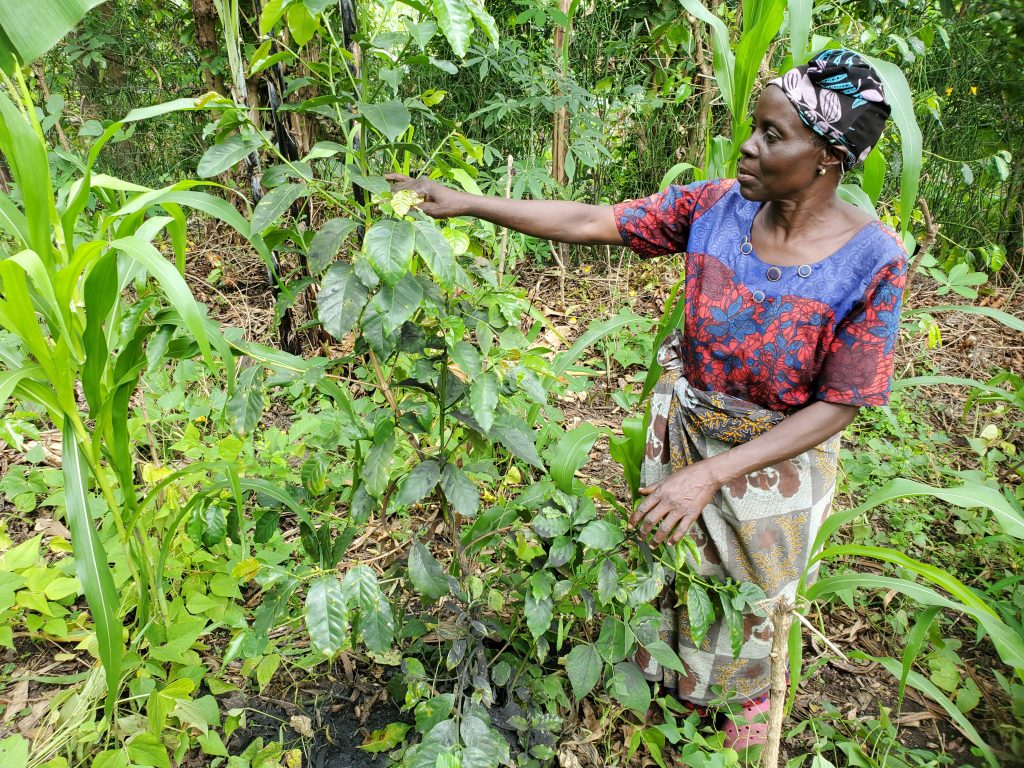
Along the boundaries of her land, she planted Markhamia lutea, an indigenous tree species known for its deep roots and resilience against strong winds. The trees now act as natural barriers, protecting crops from violent storms that sweep down from the Rwenzori Mountains.
“Coffee, bananas, cassava, and beans planted near these trees are doing very well,” she says. “Their leaves decompose and become natural manure that improves soil fertility.”
Unlike many exotic tree species, Grevillea has shallow, non-invasive roots that coexist well with crops. For Biira, this balance has transformed rocky terrain into productive farmland.
Her journey into agroforestry began after receiving training from Ecotrust Uganda, a conservation organization promoting sustainable land-use practices and carbon financing for smallholder farmers.
The training introduced farmers to indigenous tree planting, intercropping, trench digging, and soil and water conservation methods adapted to the fragile Rwenzori ecosystem.
“Agroforestry has helped us adapt to climate change,” Biira says. “It has reduced erosion and improved our resilience.”
Beyond trees, farmers are also reviving traditional soil-covering practices. Biira plants pumpkins and other creeping crops that help conserve moisture during dry seasons while reducing runoff during heavy rains.
“These crops protect the soil surface,” she explains. “Before, this land was rocky and unproductive. Now I harvest bananas, coffee, cassava, and beans from the same slopes.”
From Conservation to Carbon Income
For years, many farmers viewed tree planting as a long-term activity with little economic value. That perception began to change when carbon credit projects entered rural communities.
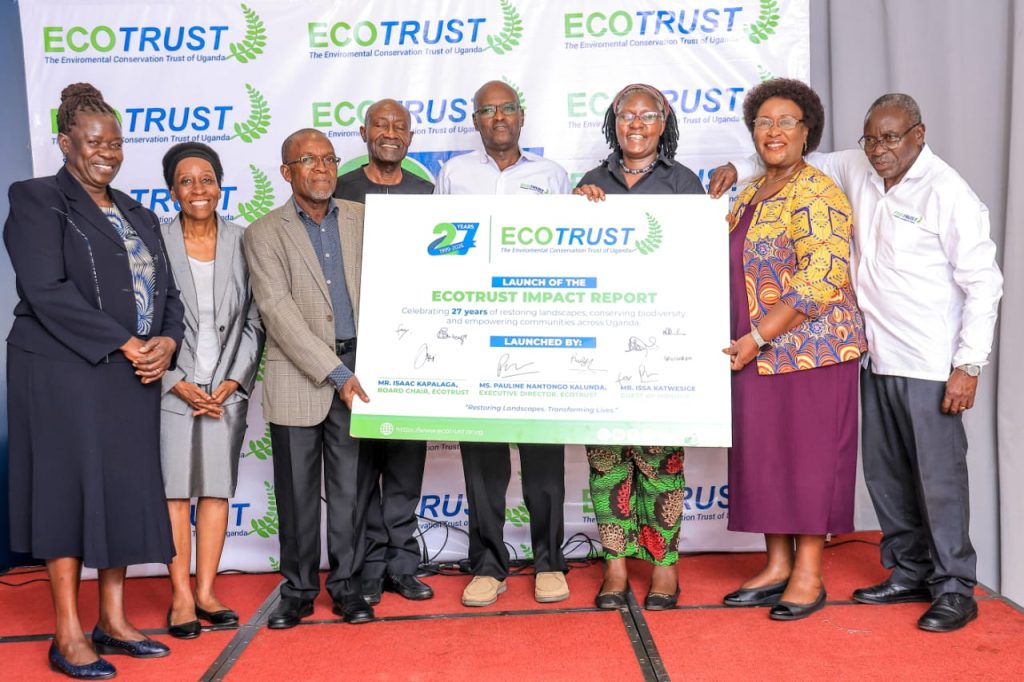
According to Pauline Nantongo Kalunda, Executive Director of ECOTRUST Uganda while addressing a media briefing at launching of the ECOTRUST impact report revealed that, agroforestry is often misunderstood as simply “farming with trees.”
“In reality, indigenous land-management practices are deeply holistic,” Kalunda explains during the launch of the Ecotrust Impact Report. “They are shaped by generations of observation, culture, and environmental knowledge.”
She says agroforestry provides far more than food production. Trees integrated into farms supply timber, medicine, fuel, fodder, shade, and ecosystem protection while also capturing carbon from the atmosphere.
“With natural forests disappearing, especially on the slopes of Mount Rwenzori, agroforestry helps integrate trees back into agricultural landscapes,” she says. “It balances food security, commercial production, and environmental health.”
Through carbon financing schemes, farmers who plant and protect indigenous trees can earn income based on the amount of carbon their trees absorb from the atmosphere.
Kalunda says Ecotrust has supported more than 54,000 households through carbon credit initiatives, helping families move beyond subsistence farming toward more sustainable livelihoods.
“Carbon credits are not only about carbon,” she explains. “Communities are also benefiting through activities like beekeeping, honey production, tree nurseries, and improved farming systems.”
Under the system, farmers are surveyed, trained, and issued certificates after carbon assessments are conducted by international partners that calculate carbon sequestration and environmental impact.
ECOTRUST works with organizations including MyClimate Foundation in Zurich Switzerland, ZeroMission Foundation in the United States, and other international climate-finance actors that help identify buyers for carbon credits generated by Ugandan farmers.
But Kalunda says the business remains challenging.
“Carbon credit projects go beyond planting trees. Farmers must understand the procedures, maintain trees over time, and commit land for conservation,” she says.
She notes that many farmers initially resisted allocating land for agroforestry because they viewed it as less profitable than commercial farming or exotic tree plantations such as eucalyptus and pine.
“People calculate the value of every acre,” Kalunda explains. “Convincing a farmer to reserve five hectares for conservation takes time.”
Still, communities that embraced indigenous agroforestry are beginning to see results.
Farmers in Kasese, Mubuku, Kilembe, and Rubirizi districts are already receiving financial benefits through carbon programs while improving soil fertility and protecting their farms from climate shocks.
Farming Against Floods
For Emmanuel Masereka, a 65-year-old coordinator of the Mbaihamia Healing Forest Initiative, agroforestry is a matter of survival.
Standing near his hillside farm, Masereka recalls the devastating floods of 2019, when raging waters swept through his village, destroying homes and crops overnight.
His own house nearly disappeared beneath the floodwaters.
“I realized that if we don’t practice agroforestry, we won’t survive,” he says.
Masereka began mobilizing his community to plant indigenous trees capable of stabilizing soils and reducing flood risks.
On his farm, Markhamia lutea anchors the land with deep roots while providing flowers for bees. Nearby stands Ficus natalensis locally known as Omutoma whose extensive roots help prevent landslides while its leaves serve as livestock fodder and traditional medicine.
Mountain bamboo strengthens riverbanks with dense root systems, while Dracaena trees help redirect runoff during storms.
“These trees are more than plants,” Masereka says. “They are shields protecting our homes, farms, and lives.”
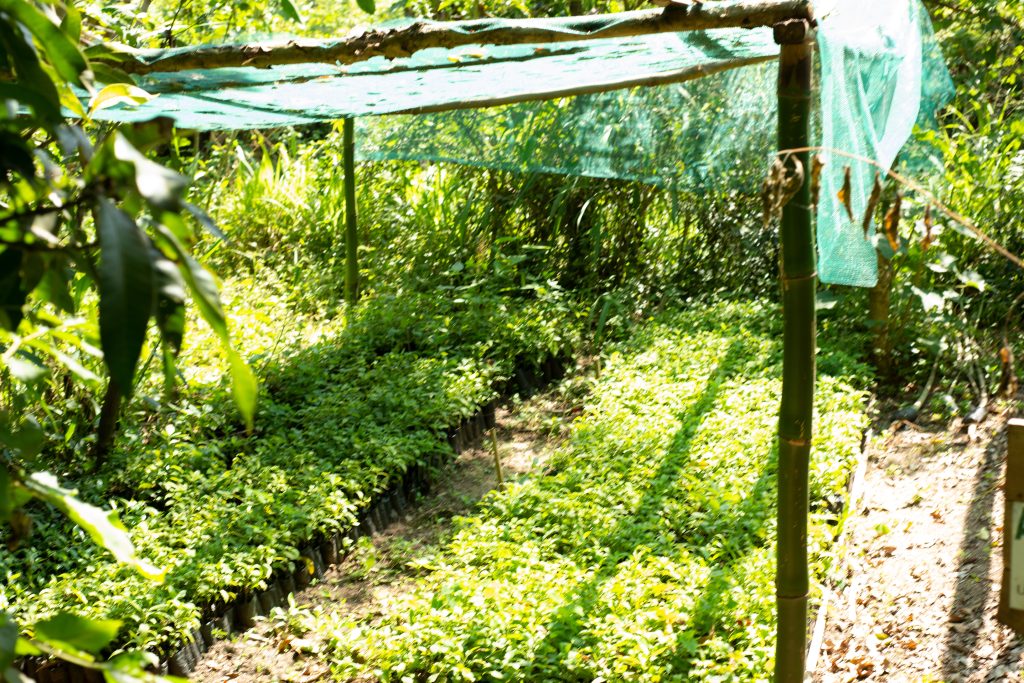
To expand the initiative, Masereka established a nursery bed that now supplies indigenous seedlings across the sub-county. The nursery grows species including Grevillea, Terminalia, Prunus africana, and Maesopsis eminii.
He has also diversified into herbal medicine production using extracts from indigenous trees, creating additional income while preserving traditional knowledge.
For Mbambu Syalivina, a mother of four, indigenous trees represent both protection and heritage.
After mudslides displaced several neighboring families, she planted Markhamia lutea along the edges of her land.
Today, the roots help hold the soil together and protect her family’s farm from erosion.
“I learned this from my mother, who learned it from her grandmother,” she says. “These trees protect us and also give us medicine.”
Her family also practices trench digging, an indigenous water-conservation method that slows runoff and preserves moisture during prolonged dry periods.
Culture, Conservation, and Women’s Leadership
Local leaders say women remain central to environmental conservation despite often having limited control over land ownership and agricultural decision-making.
Muguma Evlyne, Environment Officer for Kasese Municipality, says indigenous knowledge is proving critical in restoring fragile landscapes.
“Rainfall patterns have changed,” she says. “Rains now come late and fall violently within a short time, causing floods even in areas without rivers.”
The municipality now operates tree nurseries that prioritize women farmers and indigenous species resilient to pests and climate stress.
Evlyne says trees also carry deep cultural significance among the Bakonzo community.
Dracaena trees traditionally mark family boundaries and reduce erosion, while Ficus trees planted at the center of family land symbolize continuity, identity, and resilience.
“These trees are part of our culture,” she says. “Conservation is not only about nature. It is about heritage and survival.”
Willson Muwa Muhindo, Deputy Minister for Land and Agriculture Production in the Obusinga Bwa Rwenzururu Kingdom, praises women for leading climate adaptation efforts despite cultural barriers.
“Women have continued planting medicinal, food, and spiritual trees around homes even where traditions restricted them from planting certain species,” he says.
During the COVID-19 pandemic, Muhindo recalls communities relying heavily on herbal remedies derived from indigenous plants.
He warns against overreliance on exotic species, arguing that they weaken ecosystems and reduce biodiversity.
“Indigenous knowledge must guide conservation decisions,” he says. “Young people need to understand why native trees matter.”
A Growing Climate Economy
ECOTRUST is now exploring biodiversity credit schemes that could reward communities not only for carbon sequestration but also for protecting ecosystems and wildlife habitats.
Kalunda says communities conserving biodiversity including chimpanzee habitats and indigenous forests may soon benefit from emerging international biodiversity markets.
“Biodiversity credits are more location-specific because buyers want direct relationships with landscapes and communities,” she explains.
But she warns that climate-finance markets remain unstable and heavily influenced by global regulations and taxation policies.
“If regulations become unfavorable, buyers can move to other countries,” she says. “The market depends on trust and long-term relationships.”
Despite the uncertainties, ECOTRUST plans to expand carbon-credit programs into northern Uganda and other regions.
A Model Beyond Aid
Climate experts say agroforestry rooted in indigenous knowledge offers one of the most effective pathways for climate adaptation in vulnerable rural communities.
Niklas Hagelberg, Senior Programme Coordinator for Climate Action at the United Nations Environment Programme, describes agroforestry as a cornerstone of climate-smart ecosystem management.
“There is no single solution to climate change,” Hagelberg says. “But agroforestry using indigenous trees delivers both climate mitigation and adaptation.”
He notes that native species are often better adapted to local climatic conditions and more capable of withstanding floods, droughts, and storms.
As climate disasters continue to reshape life in Kasese, the experiences of women like Margret Biira and Mbambu Syalivina reveal a powerful truth: climate resilience is growing from the ground up.
On Uganda’s climate frontline, women farmers are proving that indigenous knowledge, when supported through carbon financing and community conservation, can do more than restore landscapes.
It can rebuild livelihoods, strengthen food security, and turn vulnerable communities into custodians of climate solutions.