BY GORRET KAJUMBA
Classrooms in Fort Portal Tourism City are meant to be safe havens for young learners. Instead, local leaders warn they are becoming sites of increasing vulnerability, as cases of sexual exploitation and abuse against children particularly girls are rising at an alarming rate.
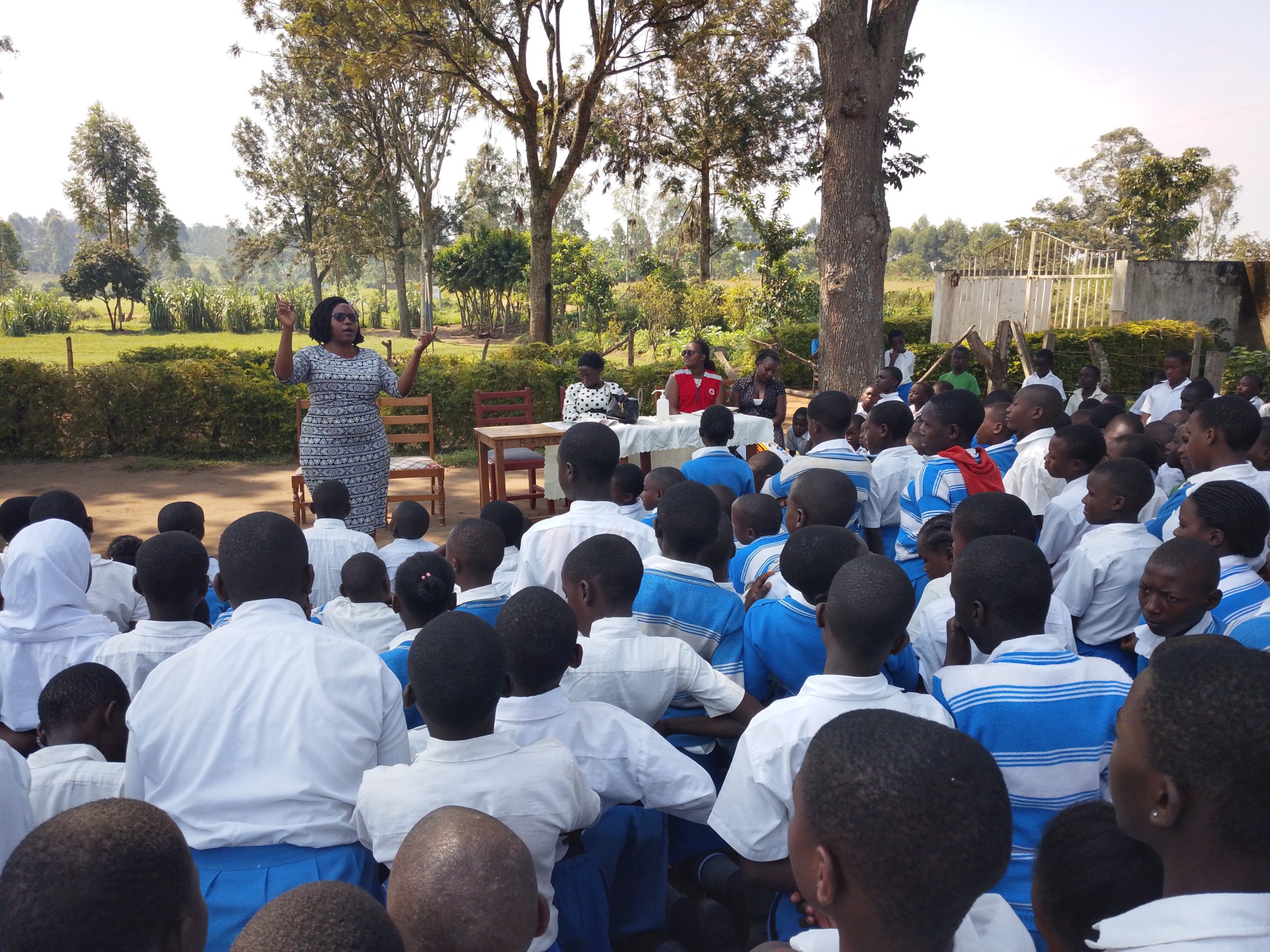
The concern comes amid a series of school outreach activities supported by UNICEF and the Uganda Red Cross, aimed at strengthening child protection and health preparedness. Education officers, health inspectors, and community leaders are moving from one school to another, speaking directly to pupils, teachers, and parents about the threats children face, both inside and outside the classroom.
At St. John Mary Vianney Community Secondary School in Central Division, pupils gathered under a tent to listen as district officials spoke about the risks of sexual abuse. Some children sat quietly, while others nodded in recognition when stories of harassment were mentioned. School Inspector Kansiime Gladcy did not mince words, warning that both boys and girls are increasingly being abused verbally and physically. “These acts are destroying young lives, especially girls. Immediate action is needed to protect our children,” she said.
At St. Mary’s Kinyamasika Demonstration Primary School, Senior Woman Teacher Night Rose delivered a blunt message to parents, arguing that while schools shoulder responsibility for safety, the problem often begins at home. “Many children spend more time on TikTok and TV than they do on homework. The habit of sexual exploitation starts at home. Parents must take responsibility and guide their children,” she said.
The warnings in Fort Portal echo a broader national crisis. Uganda’s 2018 Violence Against Children Survey found that one in three young women experienced sexual abuse during childhood. A government study across 50 schools revealed that nearly eight in ten primary school girls had encountered sexual harassment or abuse in school. Police records also paint a grim picture: in 2024 alone, more than 12,000 cases of defilement were registered nationwide. Experts believe the real figure is far higher, as stigma, fear, and weak reporting systems prevent many survivors from coming forward.
Globally, the problem is equally severe. UNICEF estimates that around 300 million children worldwide face sexual exploitation or abuse every year, including online harassment. For Uganda, where internet use is expanding rapidly, the risk of digital exploitation adds a new layer of urgency.
The challenges facing Fort Portal schools extend beyond abuse. Authorities are also grappling with health risks such as Ebola and Mpox, which have affected Uganda in recent years. Senior Health Inspector Kahunde Lucy said her team is conducting trainings to keep schools vigilant. “We are teaching teachers and students how to remain alert to epidemics. But the reality is that many schools lack basic facilities like handwashing stations and temperature guns,” she said.
At St. John Mary Vianney, Deputy Headteacher Kabasinguzi Irene listed what they still need: functioning latrines, reliable clean water, and basic protective tools. “We are doing our best, but we need support. Without resources, it is difficult to keep children safe,” she said.
To address these twin threats of abuse and disease, the Uganda Red Cross, with UNICEF support, has rolled out an integrated project in Fort Portal and neighboring Kabarole District. The program combines risk communication on epidemics with community engagement against sexual exploitation and abuse. Red Cross Project Officer Asiima Samantha said schools and communities are at the heart of the initiative. “We are working directly with learners, teachers, and parents. Protecting children is not only about responding to emergencies, it is about preventing abuse and giving young people a chance to thrive,” she explained.
Experts warn that the impact of sexual abuse on children is devastating. Victims often suffer long-term trauma, drop out of school, or face unwanted pregnancies and sexually transmitted infections. Social stigma and lack of counseling support deepen the scars. “Education is one of the few opportunities many children in rural Uganda have to break cycles of poverty,” said one education officer in Fort Portal. “If abuse forces them out of school, their future is stolen before it begins.”
The problem also threatens Uganda’s commitments to the United Nations Sustainable Development Goals, particularly those on quality education and gender equality. Rising cases of abuse in schools directly undermine both, raising questions about whether the country can meet its targets by 2030.
As the school term continues in Fort Portal, the warnings from classrooms and community meetings ring louder. The combination of sexual abuse, weak infrastructure, and epidemic threats has created a precarious environment for thousands of learners. Yet there is hope. With support from international partners, local leaders believe change is possible if parents, schools, and communities act together.
“What is happening here is not unique to Fort Portal,” said School Inspector Kansiime. “It is a national crisis. If we fail to act, we will fail an entire generation.”