
BY ALEX BALUKU
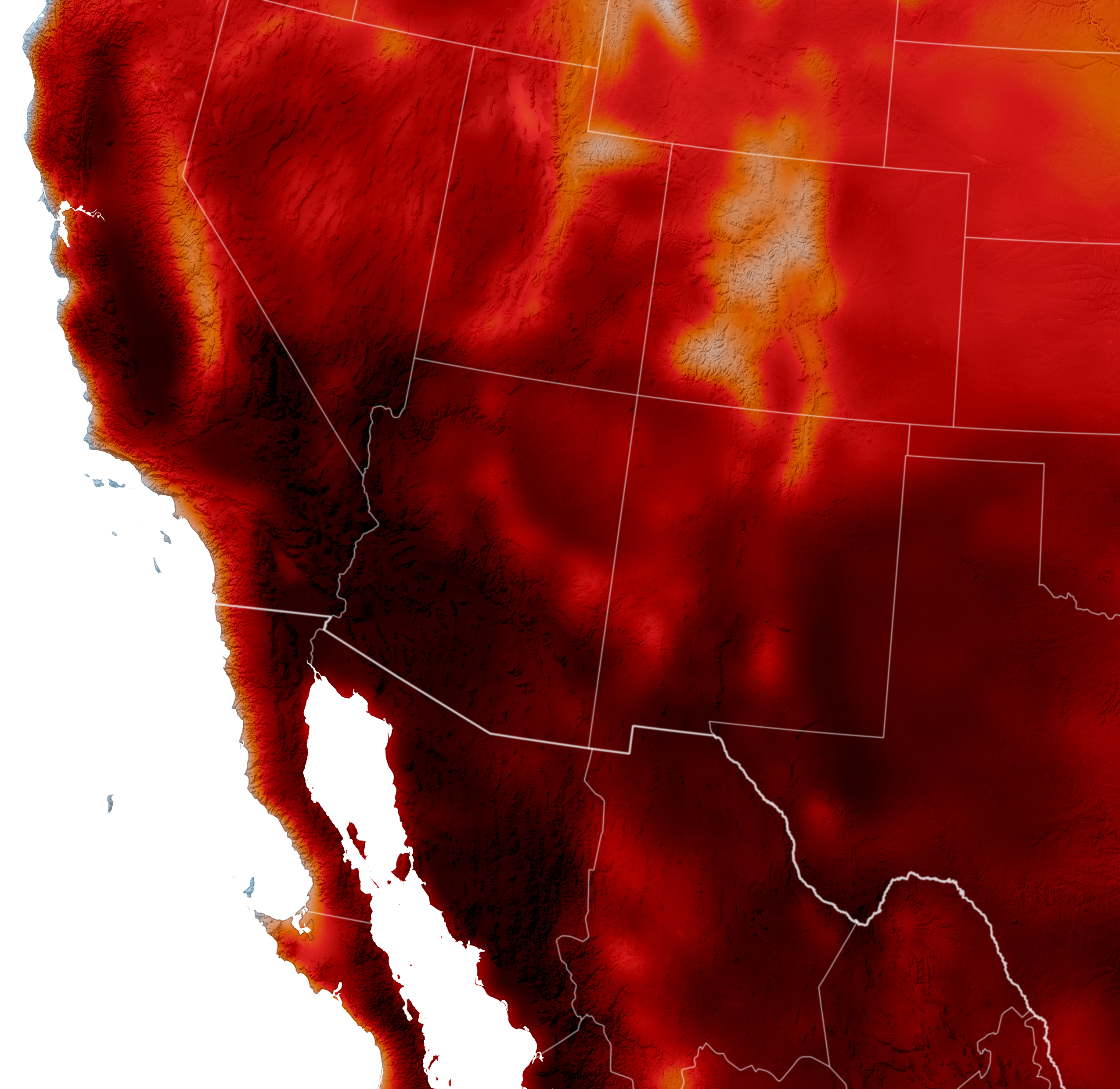
A relentless and dangerous heatwave is sweeping across the Southwest United States and northern Mexico this week, with temperatures soaring up to 18°F (10°C) above normal. Experts warn that this exceptional heat is strongly linked to human-caused climate change, putting nearly 53 million people at risk of extreme conditions.
The Climate Shift Index (CSI), a scientific tool used to assess the influence of climate change on weather events, has reached level 5 — the highest possible score — across vast areas of the southern Plains, Intermountain West, and northern Mexico. This indicates that climate change made this scorching heatwave at least five times more likely to occur.
From August 4 through 8, daytime highs are expected to range from 94°F to 106°F (34°C to 41°C) across much of Arizona, New Mexico, California, Nevada, Utah, Texas, Oklahoma, and Kansas. The most extreme heat is forecast in parts of southern California, southwest Arizona, southern Nevada, and Sonora (Mexico), where temperatures could climb to a blistering 110°F to 116°F (43°C to 47°C).
Nights will offer little reprieve. In southwest Arizona, Southern California, and Sonora, overnight temperatures are expected to remain between 87°F and 95°F (31°C to 35°C). Much of Texas, New Mexico, and Oklahoma will also see warm nighttime lows between 75°F and 85°F (24°C to 29°C), further increasing the risk of heat-related health problems.

“This extreme heat is overwhelmingly likely to be influenced by human-caused climate change,” said Dr. Zachary Labe, a climate scientist with Climate Central. “A massive heat dome is building over northern Mexico and the southern U.S., bringing dangerously high temperatures and little overnight relief for millions.”
The National Weather Service has issued moderate to extreme HeatRisk warnings across the region. The persistent upper-level ridge anchoring this heat is expected to remain in place throughout the week.
Adding to the crisis, much of the Southwest is already grappling with persistent drought, straining water resources for agriculture, hydropower, and international trade along the Rio Grande Valley.
Climate Central’s Climate Shift Index uses peer-reviewed science and real-time data to estimate how much more likely climate change made a particular weather event. The widespread CSI level 5 readings highlight the growing role of global warming in amplifying everyday weather extremes.
As millions endure sweltering heat, the latest data adds to the mounting evidence that climate change is no longer a distant threat but a present and intensifying crisis — one that communities across the Southwest and northern Mexico are already living through.
For ongoing updates, residents are encouraged to monitor local weather alerts and check the Global Climate Shift Index map.