BY INNOCENT KIIZA
For 15-year-old James Baluku Atholere (not his real names), the biggest examination of his life is approaching. But the question is not whether he has studied hard enough. It is whether the system will give him the tools he needs to sit the examination like everyone else.
At Rukoki Model Primary School in Kasese District, Atholere is preparing for his Primary Leaving Examination. He has a dream. He wants to become a theologian because, he says, he loves learning more about God. He has also given his school a reason to believe in him. Atholere recently scored 14 aggregates and passed in Division Two, emerging among the school’s leading pupils. His head teacher, Enos Mutanywana, hopes he can improve to Division One.
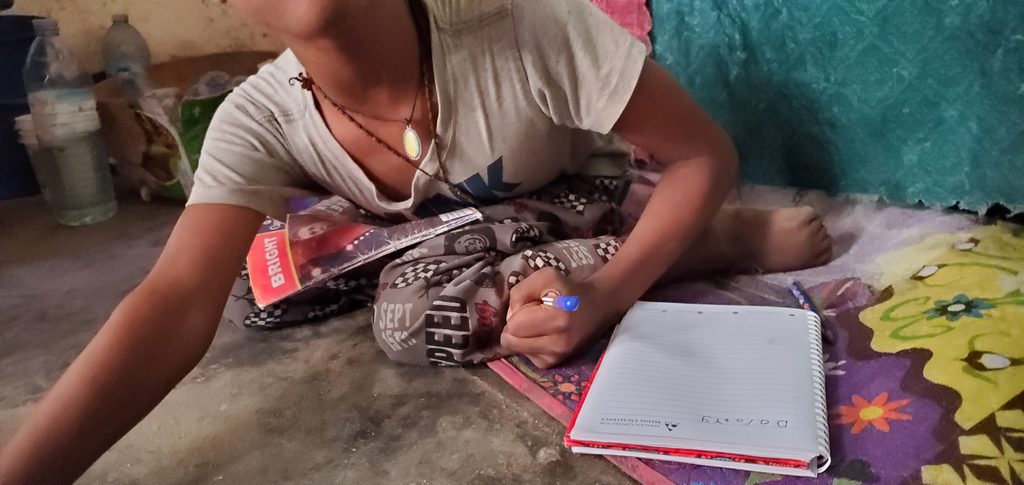
But Atholere is visually impaired. To sit the examination independently, he needs Braille. And with the national examinations approaching on November 3, 2026, he says he still does not have a teacher who can adequately train him to master the Braille machine.
His concern is simple: he wants to compete on the same terms as his classmates. “I need Braille teachers who know all the Braille grades so that I can answer all the papers comfortably like other children.”
His school is considering seeking a qualified Braille teacher or asking the Ministry of Education and Sports to provide an interpreter so that he can answer the examination orally if necessary. For Atholere, that decision could determine whether years of learning translate into an examination result that reflects what he knows.
He has already learned how to navigate obstacles. He uses a walking stick to move around school. Sometimes he knocks against walls, but over time he has learned where to pass. He says teachers and fellow pupils generally help him when he asks.
He participates in debates, quizzes and revision with other pupils, relying heavily on listening and memory to keep pace with lessons. Unlike some children interviewed for this investigation, Atholere has not considered abandoning school.
He has seen people who passed through the same school become successful.
“They are my models and motivators,” he says. “If they did it, I hope I can also reach my dream of becoming a theologian,” Atholere said.
But his story exposes the central question of this investigation: What does inclusion mean when a child is physically inside a classroom but does not have the tools required to learn and compete?
The child who wanted to stay in school
A few kilometres away, 10-year-old Jovia Kasiime (not her real names) is experiencing a different side of the same problem. Kasiime, a pseudonym, is currently out of school and staying with her mother in Kisanga Ward, Nyamwamba Division, Kasese Municipality.
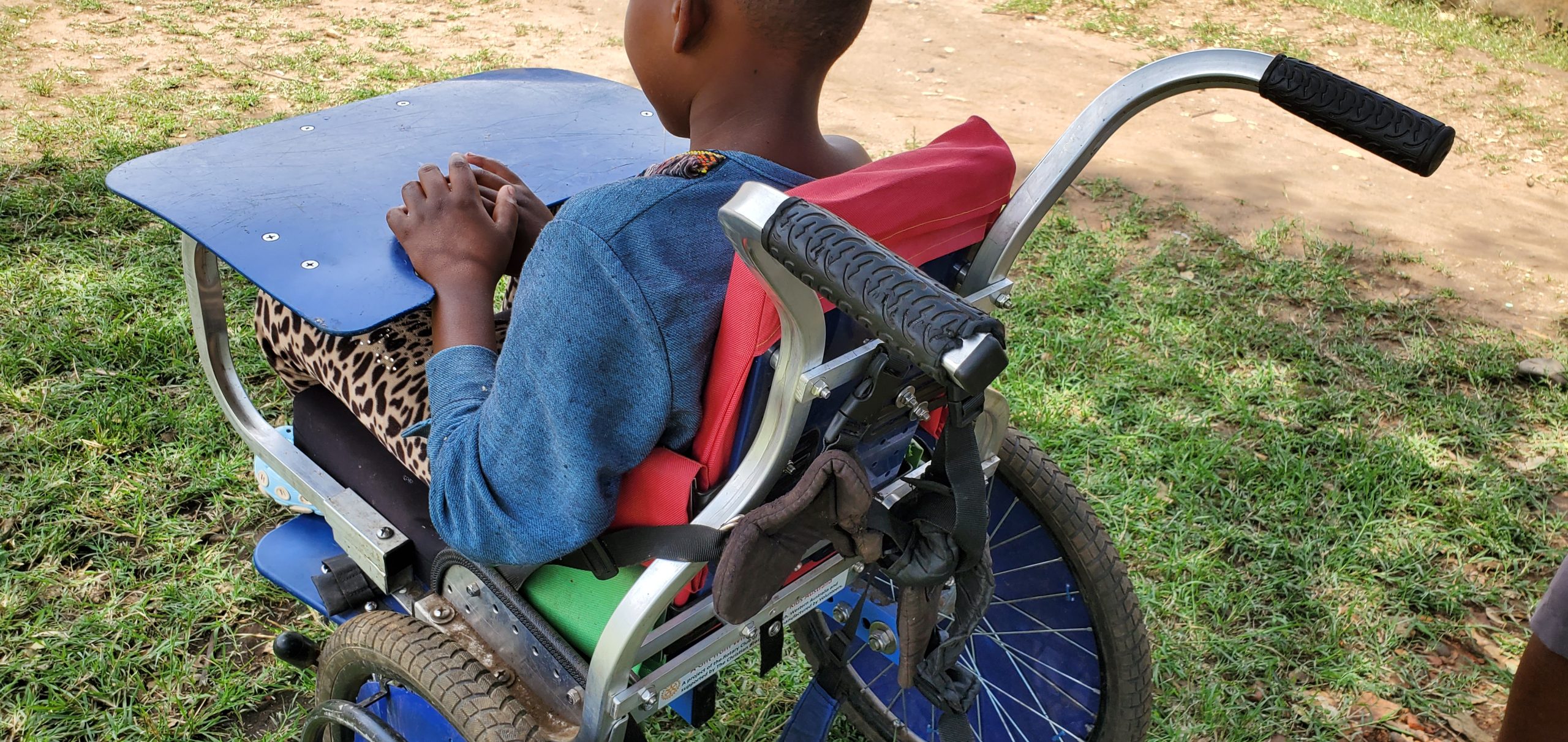
Her mother, Roda Muhirwe, says her daughter was born like any other child. But during early childhood, she developed physical difficulties that eventually left her unable to walk.
Kasiime loved school. But getting through a school day was difficult. She needed help going to the toilet. At one school, her mother says, teachers did not adequately assist her when she needed to relieve herself. She sometimes soiled herself, leaving her humiliated.
Her family moved her to another school where her elder sister was studying. At first, it appeared to be a solution. Her sister would be called from her own class whenever Kasiime needed help going to the toilet. But the arrangement created another problem: the sister repeatedly had to leave her lessons to care for her sibling. Eventually, the burden became too great.
Kasiime stopped going to school. The decision was not because she had stopped loving education. Her mother says it was because the environment around her could not adequately support her.
Kasiime could understand lessons, but she struggled to write at the same speed as other pupils. She could play with classmates during break time, but physical activities such as football and netball were largely inaccessible to her.
She also faced bullying; she recalls pupils insulting her because of her disability. At times, she says, even teachers abused her when she could not get herself to the toilet and soiled herself. The words stayed with her. She says people called her a “curse” and “a child of sin.” Despite this, she still wanted to study and chase her dream of becoming a nurse. But eventually, home became safer than school.
Her mother says Kasiime would wake up in the morning, prepare for school and then refuse to go.
“She told me they mistreat her and laugh at her,” Muhirwe says. So, her mother allowed her to remain at home while looking for another solution.
Muhirwe says a child does not necessarily leave school because she has chosen to leave education. Sometimes the conditions around her make staying almost impossible.
From pupil to dropout
Jockim Kule, 36 years old, a blind former pupil, knows how that journey can end. Kule completed Primary Seven at Rukoki Model Primary School with 17 aggregates and Division Two.
He believes he could have performed better if the school had adequate Braille equipment and teachers trained to use it. After primary school, he joined a school in Mbarara and later moved to another in Jinja. He says he experienced mistreatment and inadequate support.
At one point, he recalls, meals were missed and pupils had to wait until another scheduled meal. For a blind learner, however, one of his greatest educational barriers was the absence of appropriate learning materials.
He could understand what teachers taught. But understanding a lesson is not the same as being able to read, write, revise and sit examinations on an equal basis.
Kule says blind pupils were sometimes assessed orally, with teachers asking questions and awarding marks, but he wanted to be examined and compete like other pupils. Eventually, he dropped out. Today, he says he cannot easily return to school and finding employment is difficult because of his blindness.
The journey from a promising primary-school pupil to a young person outside education raises another question: How many children are being counted as enrolled without anyone asking whether they are actually progressing?
The classroom has pupils. But does it have the support?
At Rukoki Model Primary School, head teacher Enos Mutanywana does not dispute the challenges. He says understaffing and a shortage of learning materials remain major barriers to inclusive education.
According to Mutanywana, the teacher-pupil ratio for children requiring specialised support is far below what the school needs. He described a situation in which one teacher may be responsible for as many as 80 pupils, compared with a ratio he said should be around one teacher for five pupils in specialised support.
The school has tried to identify children’s needs before admission and, in some cases, advises parents about alternative vocational training where a child is assessed as needing a different educational pathway. But the head teacher says shortages of assistive devices remain a major problem.
The school recently received 40 hearing devices through development partners. Mutanywana says the devices were distributed among pupils with hearing impairment, but the school has 58 pupils with hearing difficulties. That leaves some children without the equipment they need.
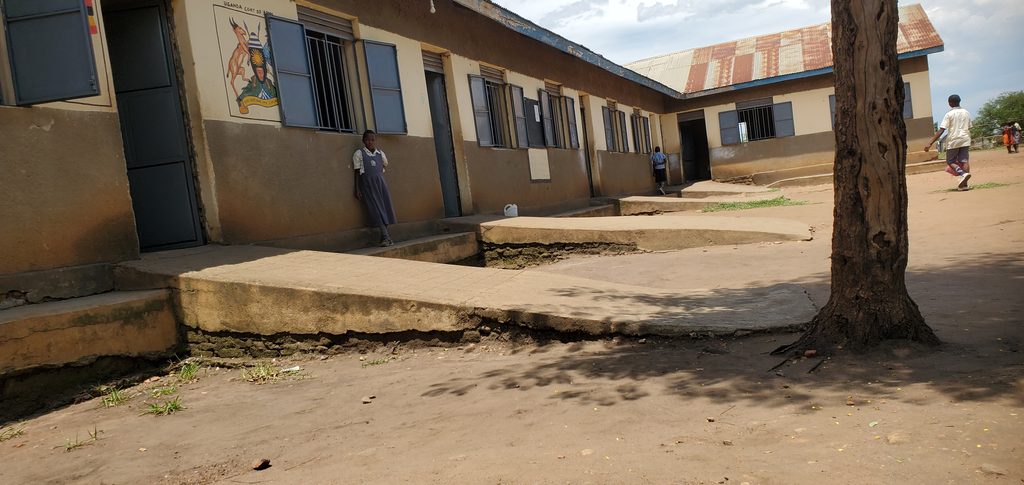
The school also has a specialised toilet constructed through corporate social responsibility support and dormitory facilities supported by development partners. But space remains limited, adding that some children have to share beds.
For Atholere, the immediate challenge is Braille. For other children, it is hearing devices. For Kasiime, it was physical access, toilet assistance and protection from bullying.
Different disabilities create different needs. But the underlying problem is similar: children are being enrolled into schools that do not always have the resources, specialised personnel or physical environment necessary to support them.
https://public.flourish.studio/visualisation/30333897/thumbnail
Inclusive on paper
The numbers of trained teachers tell another part of the story. Mutanywana says about 200 teachers may have received some training related to handling children with disabilities, but only three have specialised training for children with special needs.
He says that creates a gap between what inclusive education looks like in policy and what happens in classrooms.
“Inclusive will be on paper but on ground will be different, the problem becomes especially visible during examinations,” Mutanyawana said.
District education officials acknowledge that specialised teachers are scarce. Ernest Bwambale Thabugha, the Kasese District Education Officer, says there are shortages of teachers trained in different disabilities, including teachers familiar with sign language and Braille.
He says the district has reported the staffing problem to the Ministry of Education and Sports but remains constrained by available resources. The district also depends on development partners for some assistive devices.
Thabugha says the devices are expensive and the number of children needing them continues to increase. This creates a difficult contradiction. The system may open the school gate to a child with a disability. But once inside, the child may still lack the tools needed to participate fully.
Thabugha himself poses the question: “Is it about attending to them or making them learn and compete like others amidst resource constraints?” he asked.
When absence becomes invisible
According to Mutanywana, some children disappear from school gradually. They start missing lessons, their names appear on roll calls less frequently. Then, eventually, they stop coming altogether.
The school contacts parents when it notices repeated absence. He says such follow-up has helped combat dropout. But the experience of children such as Kasiime shows that absenteeism can have deeper causes than unwillingness to attend school.
A child may be absent because she cannot use the toilet independently. Another may stay home because there is no Braille teacher. Another may struggle because there are no appropriate learning materials. Another may withdraw because of bullying. And another may leave because the family cannot afford the additional cost of disability-related education. These factors can overlap.
The cost of being included
For parents of children with disabilities, education can come with costs that go beyond school fees. Roda Muhirwe, Kasiime’s mother, supports a family of seven children while running a small business.
She says caring for Kasiime limits her ability to work because she cannot easily leave her daughter with someone else.
“If I go to the village where the father is, who could care about her apart from me?” Muhirwe said.
Muhirwe says she has not received support from government or civil society organisations specifically for Kasiime’s education and wellbeing. She believes families like hers need assistance with education, healthcare and other basic needs.
Another parent, Esther Kikusa, describes how financial pressure contributed to difficult decisions around the education of her children, including a blind child and a child who is deaf and blind.
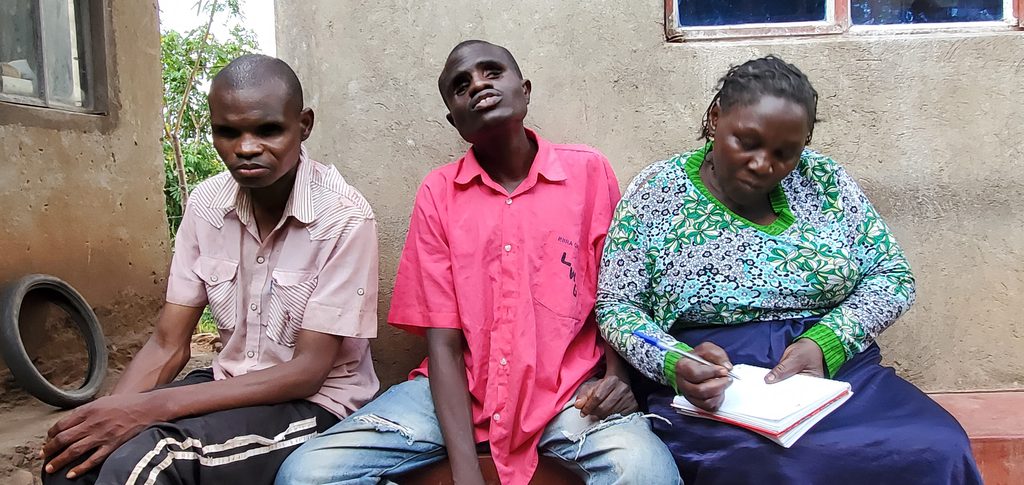
Her small business collapsed under the pressure of supporting the family. She says school fees, transport, learning materials, healthcare and poor treatment at school all contributed to the decision to move her children from one school to another.
At one point, she moved one child to a school in Kampala in search of better education. Her account shows that inclusion is not simply a school problem. It can become a family survival problem.
A parent who must remain at home to care for a child may lose income. A family may have to pay for transport. Another may have to find assistive devices. Another may have to move a child to another district because appropriate support is unavailable locally.
The cost of keeping a child in school can therefore become much higher when the child has a disability.
The problem begins before the classroom
Robison Mbuse, a community-based rehabilitation worker, argues that inclusion has to begin before a child reaches school. He says assessment should identify the child’s needs and potential, followed by rehabilitation and appropriate support.
He also points to attitudes within families. He says some parents describe a child with a disability separately from their other children, rather than simply saying they have five or six children. For him, such attitudes can affect how a child understands their place within the family and community.
He says schools are also insufficiently supported, adding that children can be physically present while being effectively absent from learning.
“They are just there but in actual sense they are absent,” Mbuse says.
Mbuse says assistive devices must be matched to individual needs through proper assessment. He also argues that school buildings should be accessible before children are sent there. Toilets, classrooms and other facilities must be usable by learners with different disabilities.
The gap between policy and reality
Hamilton Mugume, a researcher and CEO at Disability Justice and Development, says the effectiveness of inclusion should be judged by more than enrolment. One indicator, he argues, is what happens between the first day of school and completion.
If enrolment is high but completion numbers fall sharply, he says, it should raise questions about what happens to those children along the way.
The challenge, according to Mugume, is not necessarily the absence of policy. It is implementation. According to African Protocol to the African Charter on Human and Peoples’ Rights of Persons with Disabilities in Africa, Article 16, Right to Education states that every person with a disability has the right to education.
Emmanuel Buhaka, Executive Director of Lyakirema Initiative of Persons with Albinism, points to several barriers: accessibility, communication, segregation, participation and inadequate attention to the specific needs of different disabilities.
Buhaka added that for children who are blind, that may mean Braille. For deaf learners, sign language, and for children with albinism, it may include appropriate seating and measures that respond to their visual needs.
Buhaka says parents have limited ability to demand implementation of education rights, particularly when they are referred to specialised schools they cannot afford to access.
He says inclusive education remains poorly funded and claims there are almost no Braille machines in primary schools in Kasese.
That claim should be independently verified against school inventories before publication.
The numbers behind the classroom
Available research cited in the reporting material also suggests that the problem extends beyond Kasese. An Education and Sports Sector Analysis cited in the investigation identifies shortages of special-needs teachers, special equipment and materials, adapted toilet facilities and financing as challenges affecting learners with special educational needs.
The same source indicates that the distribution of special schools, units attached to mainstream schools and inclusive schools is uneven across Uganda. It records 17 special schools, 84 units attached to mainstream schools and 27 inclusive schools across the regions listed in its 2019 analysis.
https://public.flourish.studio/visualisation/30334052/thumbnail
For children in areas where appropriate facilities are distant, geography can become another barrier. The report notes that limited numbers and distribution of schools can require learners with special educational needs to travel long distances, with distance identified as one factor associated with low enrolment and dropout.
The financial burden can also be greater for children with disabilities because education may require additional instructional materials, assistive devices and teachers with specialised skills.
The evidence presented in the source material also points to long-standing underfunding of special-needs education, with many schools operating without adequate specialised teachers or Braille and sign-language learning materials.
https://public.flourish.studio/visualisation/30333982/thumbnail
But these national figures need to be read alongside what is happening to individual children. Because behind every statistic is a child.
A system trying to include, but struggling to support
Kasese District officials say progress is being made. Thabugha says new classrooms are increasingly designed with ramps, and accessible toilets and other facilities are being incorporated into newer construction.
He says the district works with development partners to provide assistive devices and improve infrastructure. But he also acknowledges the shortages.
Special-needs teachers are few, assistive devices are expensive, classrooms can be overcrowded and materials are insufficient. And during examination periods, the shortage of specialised personnel becomes especially serious.
Uganda’s examination system provides accommodations for learners with disabilities, according to the district official, but the practical challenge is finding the people and materials needed to make those accommodations work.
Prof. Waswa Balunywa, former principal of Makerere University Business School, recently decried the millions of children who drop out of school annually, noting the phasing out of the exams will ensure continuity of learners.
Hamilton Mugume, a researcher and CEO at Disability Justice and Development, called for sustainable solutions rather than focusing on symptoms.
According to the Ministry of Education records in 2024, at least 1.7 million learners, including those with disabilities, from both private and government schools who joined Senior One in 2019 failed to make it to Senior Six this year due to various reasons.
This creates a distinction that is often lost in discussions about inclusive education: Access is not the same as participation. And participation is not the same as completion.
What happens when a child is included only on paper?
For Atholere, there is still time. He remains in school. His teachers see academic potential. His classmates have largely accepted him. He has a dream and is preparing for the examination that could open the next door. But he needs a Braille teacher who is competent with all Braille grades.
Kasiime has already crossed a different threshold. She is at home. She still loves school. She still dreams of becoming a nurse. But the barriers around her became greater than her ability to overcome them alone.
Kule crossed another threshold. He completed primary school, but inadequate learning materials and experiences in subsequent schools contributed to a journey that eventually ended in dropout.
Their stories are different. Yet together they reveal a pattern. For example, a child can be enrolled but unable to access learning materials. A child can understand lessons but be unable to write at the same pace. A child can attend school but spend much of the day dependent on another child for basic needs.
A child can sit in a classroom but fear asking a question because of previous humiliation, and a child can disappear from the roll call and eventually disappear from school. This is where the meaning of inclusion must be questioned.
Beyond the school gate
For Muhirwe, Kasiime’s mother, the answer is not complicated. Her daughter wants what other children want: education, friends, a future, and a chance to become someone.
“Disabled children also have a right to enjoy school, living and survive like any other children,” she says.
She believes government policies and programmes must move from documents into the daily lives of families.
Kikusa, whose children have experienced multiple barriers, says children with disabilities need teachers who understand their individual needs and schools equipped with appropriate materials. She says children need to be treated with dignity. They need teachers who give them hope rather than making them feel incapable.
At Rukoki Model Primary School, Atholere is waiting for the support that could allow him to sit his examination like his classmates.
At home, Kasiime is waiting for an environment where she can return to school without fear of humiliation or dependence.
And Kule represents what can happen when a learner makes it through one stage of education but cannot find enough support to continue.
Their experiences point to a gap between being present and being included. For children with disabilities, that gap can be the distance between a classroom and a dream. And sometimes, between a classroom and dropping out.


