BY RAM KIKAMA
Decades after asbestos-containing materials were introduced around Kilembe’s copper mines, deteriorating structures still shelter families in Kasese, raising questions about exposure, environmental contamination and the health risks that may remain.
For decades, residents of Kilembe in Kasese District have lived alongside the physical remains of Uganda’s once-thriving copper-mining industry.
Among the most visible remnants are old asbestos-containing structures, some of which are now deteriorating but continue to shelter families.
The buildings are a legacy of the mining era that transformed Kilembe from the 1950s. Historical records show that Canadian companies Frobisher Limited and Ventures Limited formed Kilembe Mines Limited in 1950 to mine copper beneath the Rwenzori Mountains. Commercial copper production began in the mid-1950s, while mining operations eventually ceased in 1982.
But while the mines stopped operating decades ago, some of the materials associated with that era remain.
Residents, environmental officials and health experts now raise concerns about the possible consequences of continued exposure to asbestos-containing materials in the community.
The question, however, remains unanswered: how much exposure is occurring today, and what health and environmental consequences, if any, can be attributed to the asbestos legacy of Kilembe?
Living with the legacy
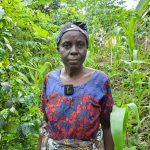
For Mrs Baheresi Edreda, a widow and resident of Road Barrier in Namuhuga Ward, the issue is deeply personal.
Edreda says her family has lived in the Kilembe area since the 1980s. Her late husband, Emanuel Kaseija, previously worked as a police officer in Kampala before being laid off.
His health problems, she says, began with internal complications, a painful and distended abdomen and what was initially diagnosed as chronic ulcers at a health facility in Mbarara.
As his condition worsened, Emanuel travelled to Kampala seeking further medical attention.
Doctors, according to Edreda, discovered a hard mass in his lower abdomen that they described as cancerous.
“Ulcers became severe until experts diagnosed him of cancer which initially presented as ulcers. They found that he had developed something hard on the lower abdomen. The abdomen kept on swelling continuously after which he then developed something hard like a stone in the abdomen,” Edreda narrates.
Emanuel was eventually brought back home and placed on treatment. Edreda says he died four days after being admitted to Kasese Hospital in Kasese Municipality in March 2023.
Edreda does not have medical evidence establishing what caused her husband’s cancer. But she says his illness is not the only health concern she has witnessed in the neighbourhood.
She says four other people in the same locality have previously experienced health problems that residents considered similar, leaving families uncertain about what might be behind them.
That uncertainty is compounded by the environment in which the community has lived for decades.
Edreda says her family and other residents in the area have for years depended on water from River Nyamwamba for drinking and other domestic uses.
She also remembers the asbestos-containing structures in the Kilembe Valley from her childhood. She says her father moved to Kilembe in the 1960s and worked as a casual labourer in the copper mines.
Another family, another illness
Edreda directed me to another elderly resident, Matama Helesi.
Helesi, 78, says she has lived in Kilembe since August 1968. Her late husband also worked in the copper mines.
She says her health problems began in 1998, initially presenting as diabetes and high blood pressure, which were diagnosed at Kilembe Mines Hospital.
Her condition later deteriorated.
After experiencing severe internal pain, she sought treatment at Kagando Hospital in Kasese District, where she says doctors diagnosed her with severe ulcers and prescribed medication.
“I developed internal pains and was picked from the market where I was selling second-hand clothes,” Helesi narrates.
She says the pain eventually became concentrated in her lower abdomen, which gradually began to swell.
“This part of the abdomen has since started swelling and it’s also hard while the other side is a bit of a normal condition, when my cloth slides over this part, I feel a lot of pain, they feel like pin pinches in the body,” Helesi says.
In 2013, she travelled to Kampala International Hospital, where she says she underwent surgery.
Her illness, like Emanuel’s, cannot on its own establish a connection to asbestos exposure.
But Helesi’s story highlights the larger unanswered question facing communities that have lived around the former mining infrastructure for generations: what exposures have residents experienced, and have they ever been systematically assessed?
For years, Helesi says, her household has also relied on River Nyamwamba for domestic water.
“All these years we have been using water from River Nyamwamba because it is cold and we feel it is better for us that is why we even don’t boil it,” she says.
The concerns about water, however, should not automatically be attributed to asbestos. Any claim about contamination of River Nyamwamba requires laboratory evidence identifying the specific contaminants and their concentrations.
An asbestos legacy left behind
According to Kasese Municipality Senior Environmental Officer Mrs Evelyne Mugume, asbestos-containing materials were historically used at Kilembe copper mines for roofing, water piping, paving and other purposes.
She says some of these materials remain distributed across parts of the district and municipality.
Mugume is particularly concerned about deteriorating materials and the possibility that asbestos-containing waste could become mixed with sand and soil used by residents for construction.
She says the National Environment Management Authority (NEMA) has classified asbestos as hazardous waste and argues that it should not be handled casually.
Mugume says government is discouraging residents from using asbestos-containing materials and warns that disturbing them can expose people to hazardous fibres.
“You should not give yourself any opportunity to interact with asbestos especially when it is broken because this is where you get these challenges,” she says.
She also argues that asbestos-containing materials should be identified and handled by trained technical personnel and disposed of according to applicable guidelines.
Her concerns are consistent with established scientific evidence. The World Health Organization says all forms of asbestos are carcinogenic and that exposure can cause lung cancer, mesothelioma and other diseases. It also warns that people can remain at risk decades after asbestos-containing materials were installed, particularly when materials are damaged, maintained, demolished or disturbed.
The U.S. National Cancer Institute similarly says asbestos fibres can be released when asbestos-containing products are disturbed and can remain in the lungs for long periods.
Research has also raised concerns about asbestos-cement roofing as an ongoing environmental exposure, particularly when installed materials weather or are disturbed.
But establishing that such exposure is occurring at dangerous levels in Kilembe requires local environmental testing.
A mining town surrounded by deteriorating infrastructure
Decades after the suspension of copper mining, asbestos-containing structures remain visible in different parts of Kilembe and elsewhere in Kasese.
Some are dilapidated.
Some continue to accommodate families.
Kilembe Mines began commercial copper production in the 1950s and became one of Uganda’s major mining operations. Historical records show that Frobisher Limited and Ventures Limited formed Kilembe Mines Limited in 1950. The company was later acquired by Falconbridge of Africa before the Ugandan government acquired its shares in 1975. Copper extraction eventually ceased in 1982.
The closure did not erase the physical footprint of the industry.
Mr Bwanandeke Jerimaya, the Kasese District Deputy Chairperson, says much of the old infrastructure has deteriorated.
“Very many things have since broken down in Kilembe mines, the asbestos materials and other things, even when you look at these tunnels and materials and the type of things that come from the tunnels, they flow down into River Nyamwamba and you find children playing in water and indigenously one can tell that the materials are disastrous. They say it can cause cancer, a disease that can really claim our peoples’ lives,” he says.
His statement raises another important investigative question: what exactly is entering River Nyamwamba from the old mining area?
That question cannot be answered simply by observing materials flowing downstream. It requires independent sampling and laboratory analysis to determine what contaminants are present and whether concentrations pose a health or ecological risk.
Bwanandeke says the district intends to engage stakeholders, including the new investors at Kilembe Mines, Kasese Municipality leaders, technical staff and Kasese District Members of Parliament, to discuss environmental and public-health concerns.
He also says the district is yet to receive and scrutinize environmental and sanitation-related regulatory documents from the new contractors.
The cancer question
Mr Edwin Mumbere, Managing Director of the Citizens Centre for Conserving the Environment (CECIC), believes asbestos exposure could be contributing to cancer concerns in Kasese.
“The fact that most houses in Kilembe have that kind of (asbestos material) roofing, we can directly say it is contributing to the raising cases of Cancer in Kasese, however it also needs to be studied extensively,” Mumbere says.
The qualification is important.
There is established scientific evidence that asbestos exposure causes cancer. But there is currently insufficient evidence presented in this reporting to establish that asbestos exposure is responsible for particular cancer cases in Kasese.
Mumbere says CECIC recently conducted research examining the relationship between water quality in Kasese and historical mining activities at Kilembe, including existing copper tailings.
He says the study found high levels of heavy metals in water in the district and argues that this may contribute to cancer concerns.
The heavy-metal issue should also be treated separately from asbestos exposure. Both may be relevant to the environmental legacy of mining, but they require different evidence.
Mumbere says CECIC has engaged communities and government agencies, including the Ministry of Water and Environment and Ministry of Health, and wants more partners to help communicate environmental-health risks in local languages.
He also calls for government to remove existing asbestos-containing roofing materials and for environmental assessment information relating to renewed mining activities to be made publicly available.
What happens as mining returns?
The questions become more urgent as Kilembe enters another chapter.
In May 2025, the Kilembe Mines assets were handed over to Sarrai Group of Companies as part of efforts to revive the historic mining operation.
The revival creates an opportunity to examine not only future mining activities but also the environmental liabilities inherited from the past.
That includes the old buildings, asbestos-containing materials, mining waste, water systems, tailings and other infrastructure left behind by previous operators.
The government and new investors therefore face a question that goes beyond reopening a mine:
What happens to the environmental and health risks accumulated over decades of mining?
A risk that can remain hidden for decades
Dr Mwesige Benjamin, an oncologist and specialist in cancer diagnosis and treatment at the Uganda Cancer Institute, says asbestos-containing materials can release microscopic fibres when they deteriorate or are improperly handled.
He says inhalation of asbestos fibres is associated with cancers including lung cancer and mesothelioma.
In mining communities, he says exposure may occur through degraded roofing materials, construction and demolition activities, and waste associated with old industrial sites.
Dr Benjamin also emphasizes the long latency of asbestos-related diseases.
“There could be a link between cancer cases in the district to the earlier exposure of asbestos materials in the areas where mining took place,” he says, adding that this possibility requires further investigation.
Scientific evidence supports the long latency concern. The U.S. Agency for Toxic Substances and Disease Registry notes that symptoms of mesothelioma may not appear until decades after exposure, while WHO says asbestos-related diseases can emerge many years after exposure.
Dr Benjamin also warns that exposure to tobacco smoke and asbestos can substantially increase lung-cancer risk.
Uganda’s growing cancer concern
The asbestos debate comes at a time when cancer is receiving increasing national attention.
On August 7, 2026, President Yoweri Museveni, addressing the National Resistance Movement Parliamentary Caucus at Speke Resort Munyonyo in Kampala, expressed concern about the country’s cancer and diabetes burden.
The President questioned why cancer appeared to be increasingly common and said government needed to investigate its causes and strengthen prevention.
He also spoke about requests from Ugandans seeking assistance to travel abroad, particularly to India, for cancer treatment.
The comments underscore the need to investigate environmental and occupational risk factors but they do not establish that asbestos is responsible for cancer in Kasese. Uganda’s National Cancer Control Plan also recognizes environmental and occupational exposures among cancer-related concerns.
The unanswered questions
The evidence gathered in Kilembe presents a troubling picture, but it also reveals significant gaps.
Residents continue to live around old asbestos-containing structures.
Environmental officials acknowledge the presence of asbestos-containing materials and warn residents against disturbing them.
Health experts confirm that asbestos exposure can cause serious diseases, sometimes decades after exposure.
Environmental groups have raised concerns about asbestos, heavy metals and mining-related contamination.
But several questions remain unanswered.
How many asbestos-containing buildings remain in Kilembe?
How many people are still living or working in them?
Have the materials been systematically mapped and tested?
Are asbestos fibres present in household dust, soil or air around the affected communities?
What contaminants are present in River Nyamwamba, and at what concentrations?
How many former Kilembe workers or residents have developed asbestos-related diseases?
And, most importantly, who is responsible for identifying, managing and safely removing the remaining hazardous materials?
These questions require evidence, not assumptions.
For families such as Edreda’s and Helesi’s, however, the uncertainty is already part of everyday life.
Seven decades after asbestos-containing materials became part of Kilembe’s mining infrastructure, some residents continue to live beneath or around the physical remnants of that industrial past.
The copper may have stopped being mined decades ago.
But the environmental legacy of the mine has not necessarily disappeared.
What remains to be established is how much risk those remnants pose today, and whether government, health authorities and the new generation of mine operators will investigate and address that risk before it becomes another legacy passed to the next generation.